

Importing building materials to Bali in 2027 — tiles, sanitary fittings, structural steel, specialized finishes, or construction machinery — generally goes through the same customs framework as other commercial cargo, but with extra attention to technical standards, quantity thresholds, and machinery-specific permits that can apply depending on the item category. There is no shortcut around these checks, and the exact requirements for your shipment are confirmed case by case once the goods and their HS codes are reviewed.
Why do construction materials often need extra documentation?
Beyond standard customs paperwork, certain building materials and machinery may be subject to technical standard verification (SNI compliance for some categories), which is separate from the customs clearance process itself and administered by relevant technical agencies. Developers and contractors sourcing materials from overseas for villa or hotel projects should factor this verification step into their project timeline rather than assuming standard clearance alone covers it.
What are common categories developers and contractors import?
- Tiles, sanitary ware, and specialized finishing materials
- Structural steel and prefabricated components
- Construction machinery and heavy equipment
- Electrical and mechanical systems for hotel/resort projects
- Specialty items not readily available from local suppliers
For a broader look at how our team supports projects in this category, see construction import services in Bali.
Sea freight via Benoa Port vs. air freight — which fits construction cargo?
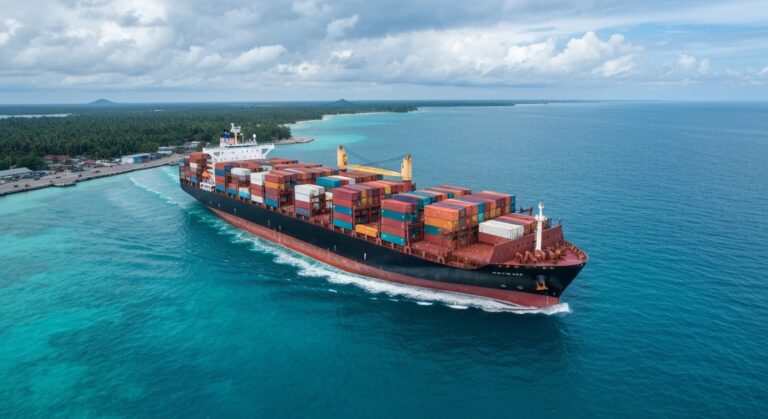
Given the volume and weight typical of construction materials and machinery, sea freight through Benoa Port is usually the more economical route, especially for full container loads (FCL). Air freight through Ngurah Rai is generally reserved for smaller, urgent components rather than bulk building materials, given the cost difference per unit of weight.
What should be planned before ordering materials from overseas?
1. Confirm HS codes and any applicable technical standards early
Knowing the HS code before purchase helps clarify whether SNI or other technical verification applies, avoiding surprises after the shipment has already left the origin country.
2. Build customs lead time into the project schedule
Because clearance duration depends on document completeness and the inspection lane assigned by customs officers, project timelines should include buffer time rather than assuming a fixed number of days.
3. Get an estimate of duty and tax before committing to the order
Since duty rates vary by material category and are confirmed case by case, request a working estimate before finalizing large purchase orders, so project budgets reflect realistic landed costs.
How does this differ from importing machinery specifically?
Heavy machinery for construction projects often involves additional documentation related to its intended use, ownership structure (owned vs. leased), and in some cases temporary import provisions if the equipment will be re-exported after the project concludes. This is handled on a case-by-case basis given the range of machinery types and project structures involved. Our broader industry context is available at industries we serve.
Key takeaways
- Building materials generally follow standard commercial customs processes, but certain categories require additional technical standard verification (SNI).
- Sea freight via Benoa Port is typically more economical for bulk construction materials than air freight.
- Confirm HS codes and technical standards before ordering, not after goods arrive.
- Build customs lead time into project schedules rather than assuming a fixed clearance duration.
- Temporary import provisions may apply to machinery intended for re-export after project completion.
How does phased project delivery affect the import plan?
Large construction or hospitality projects rarely import all materials in a single shipment — most are phased according to construction stages, with structural materials arriving first, followed by finishing materials, and equipment or furnishings closer to project completion. Each phase can be treated as its own shipment with its own documentation cycle, which allows classification and permit issues discovered in an early phase to be corrected before later phases are ordered, rather than repeating the same mistake across an entire project’s import volume.
Coordinating with local suppliers alongside imports
Many projects combine imported specialty materials with locally sourced construction materials. Keeping clear records of which materials are imported (and therefore went through customs clearance) versus locally purchased helps avoid confusion during project audits or when applying for building permits that may require documentation of material sourcing.
This distinction also matters for cost tracking — imported materials carry landed costs that include duty, tax, and freight, which should be reflected separately in project budgets rather than blended with locally purchased material costs that don’t carry the same import components.
Planning checklist for a construction material import
| Planning step | Why it matters |
|---|---|
| Confirm HS codes for each material category before ordering | Identifies whether SNI or other technical verification applies |
| Request a working cost estimate before finalizing purchase orders | Keeps project budgets realistic once duty and tax are factored in |
| Align shipping method (sea vs. air) with project timeline | Sea freight is cheaper but slower; balance against deadline pressure |
| Clarify machinery ownership and re-export plans upfront | Determines whether a temporary import arrangement is worth pursuing |
None of these steps guarantee a specific clearance timeline, since inspection lane assignment remains at the discretion of customs officers. They do, however, consistently reduce the administrative friction that developers and contractors encounter when importing construction materials into Bali.
Frequently asked questions about importing building materials
Do secondhand or refurbished machinery imports face extra restrictions?
Certain categories of used machinery are subject to additional import restrictions aimed at protecting domestic industry and ensuring safety standards are met. Whether your specific equipment falls under these restrictions depends on its classification and condition, which needs to be verified before shipment rather than assumed.
How does GST or VAT apply to construction material imports?
Import VAT (PPN) generally applies to the customs value of imported goods in addition to duty, following the same framework as other commercial imports. The combined effect on landed cost is why we recommend requesting a full cost estimate rather than budgeting from duty rate alone.
Can materials be imported temporarily for a project and re-exported later?
For equipment intended to leave Indonesia again after project completion, a temporary import arrangement may reduce upfront duty exposure, provided the re-export condition is properly documented and honored. This needs to be arranged before the equipment arrives, not after.
What happens if materials arrive but don’t meet technical standards on inspection?
If goods fail a required technical standard check, they may be held pending remediation, re-export, or in some cases destruction, depending on the nature of the non-compliance and the applicable regulation. This underscores why verifying standards compliance before shipping is far more cost-effective than discovering an issue after arrival.
Ready to plan a construction material import to Bali?
Share your material list, estimated quantities, and project timeline with our team so we can outline the documentation path and a working cost estimate before you place orders. Contact us via WhatsApp at +62 811-3941-4563 or email [email protected].