Indonesian customs compliance is built on a layered framework of HS code classification, LARTAS (Larangan dan Pembatasan) restricted-goods regulations, and free trade agreement (FTA) rules of origin — each capable of either accelerating your shipment or stopping it cold. Bali Customs Clearance provides expert compliance services and self-serve tools that help you classify goods correctly, secure the right permits, and unlock preferential duty rates worth 5-30% per shipment.
Explore
Three core pillars to keep every shipment compliant and cost-optimized.
Full permit pathway for restricted goods — BPOM, SNI, Ministry of Trade, quarantine — assessed before shipment to prevent delays.
Learn moreAccurate tariff classification with binding ruling support. Get the right HS code before customs decides for you.
Learn moreSelf-serve duty, VAT, and PPh 22 estimator with FTA preferential rates — landed-cost transparency in seconds.
Learn moreDuty Savings
Indonesia participates in 15+ bilateral and multilateral FTAs. Each can dramatically reduce import duties for qualifying products.
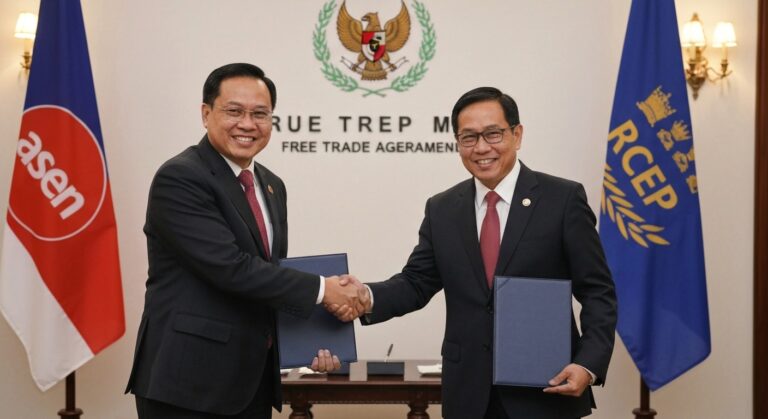
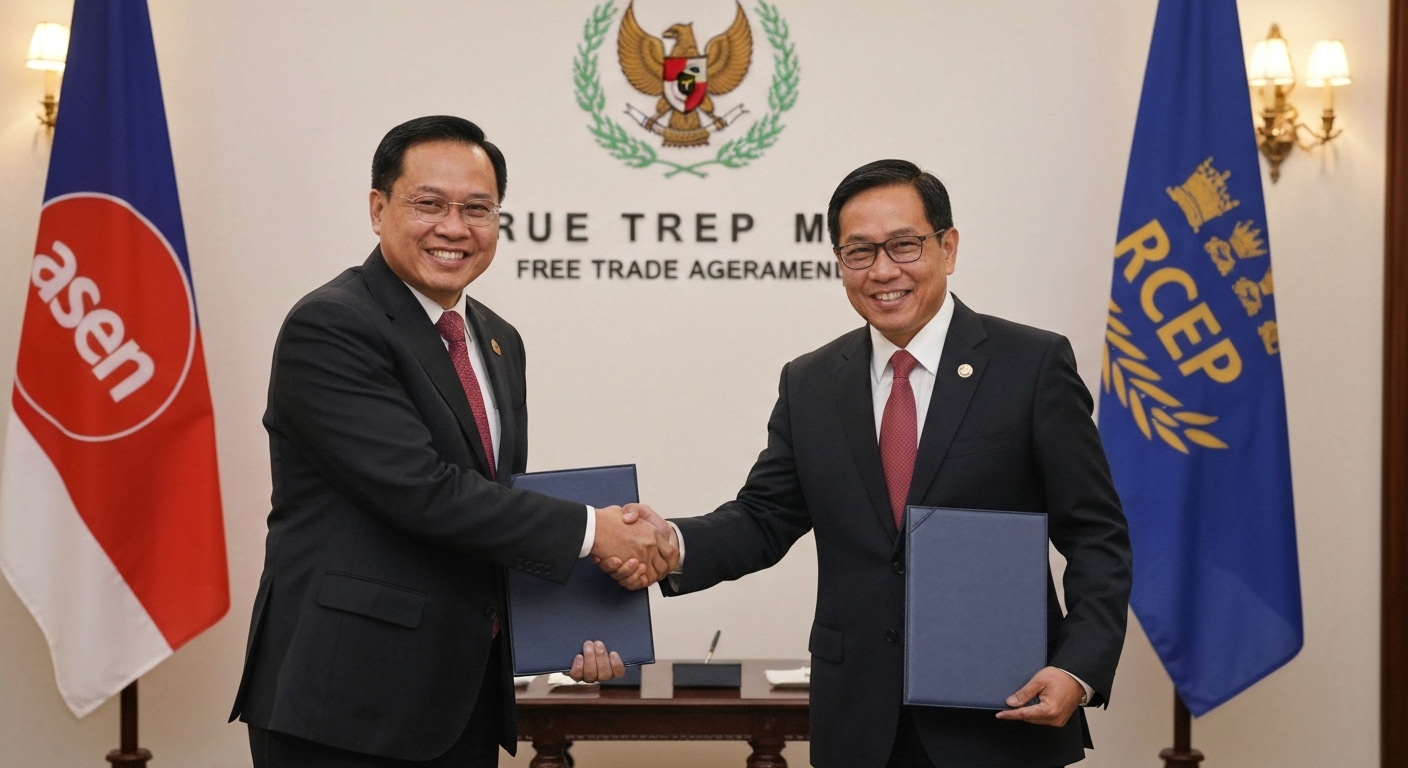
ASEAN-China FTA (Form E) covers Indonesia’s largest trade partner. RCEP expands coverage across 15 countries including Japan, Korea, Australia, and NZ — significant duty reductions on manufactured goods, raw materials, and agricultural products.
Indonesia-Japan EPA (Form IJEPA) opens preferential access for Japanese machinery, automotive parts, and electronics. ASEAN-Korea FTA (Form AK) offers duty savings on Korean electronics, vehicles, and industrial goods.
Indonesia-Australia CEPA is one of Indonesia’s newest FTAs providing enhanced market access for Australian products. AANZFTA extends coverage to New Zealand — critical for Bali’s strong Australian trade relationship.
Section 01
Free trade agreements reduce or eliminate import duties for qualifying products traded between member countries. To claim the preferential rate, your shipment must satisfy three conditions: (1) the product must be on the agreement’s tariff schedule with a preferential rate; (2) the product must meet the FTA’s rules of origin — typically requiring substantial transformation or a minimum local content percentage in the originating country; (3) you must present a valid Certificate of Origin (CoO) issued by the authorized body in the exporting country.
Our compliance team handles each of these checks before goods ship — we don’t want to discover at customs that paperwork is missing or that the product doesn’t qualify. Real-world FTA utilization is the difference between paying the 25% MFN duty rate and paying 0% on the same shipment. Multiply that across a year of imports and the savings become substantial.
Section 02
Compliance isn’t just about avoiding penalties — it’s about being predictable. When customs trusts your declarations, your shipments move faster. When your HS codes are correct from the start, you pay the right duty (not too much, not too little). When your LARTAS permits are secured before goods arrive, there are no surprise holds at the port.
We operate as a trusted-trader-grade partner: triple-verified documentation, proactive regulatory monitoring, and audit-ready records on every shipment. For high-volume importers, this translates to lower inspection rates, faster Green Channel assignment, and stronger relationships with regulatory agencies — all of which compound over time into a real operational moat.
Common Questions
Savings depend on the product and origin. Many products that face 5-30% MFN duty rates qualify for 0% preferential rates under FTAs like ACFTA, IJEPA, or AANZFTA. For a single container of qualifying goods, savings can range from a few hundred dollars to tens of thousands. Our team calculates exact savings before shipment.
A Certificate of Origin (CoO) is an official document issued by the exporting country’s authorized body (chambers of commerce, customs, or trade ministry) that proves the goods meet the FTA’s rules of origin. Different FTAs require different forms (Form E for ACFTA, Form IJEPA for Indonesia-Japan, etc.). We coordinate with your supplier to ensure the correct CoO is obtained at origin.
LARTAS (Larangan dan Pembatasan) is Indonesia’s framework of restricted and prohibited goods. Many common imports — food, cosmetics, electronics, textiles, pharmaceuticals — require permits from agencies like BPOM, the Ministry of Trade, or Karantina before they can clear customs. We assess every shipment for LARTAS exposure during our pre-clearance review.
Critical. The HS code determines the applicable duty rate, eligibility for FTA preferential rates, and any LARTAS restrictions. An incorrect code can result in overpaid duties, missed FTA savings, customs penalties, or shipment holds for re-examination. We classify every product before declaration and can obtain binding rulings for complex items.
In some cases, yes — Indonesian customs allows retroactive duty refund claims (restitusi) within specific time limits if the CoO is obtained after clearance. The process is complex and requires the original declaration, valid CoO matching the shipment, and other supporting documentation. Contact us to assess if your past shipments qualify.
Get Compliant Today
HS code, LARTAS, FTA eligibility — get a definitive answer from a PPJK-licensed broker, usually within 2 business hours.
Handled by BD Juara Holding Group