




B2B customs clearance in Bali for 2027 is fundamentally about building a repeatable, compliant process for recurring shipments rather than treating each import as a one-off transaction — corporate importers benefit most when documentation patterns, HS code classifications, and duty estimates are established once and reused, rather than re-negotiated with every shipment. This guide outlines what strategic planning looks like for businesses operating supply chains into Bali.
Why does B2B customs planning differ from personal or one-off imports?
A business importing regularly into Bali faces cumulative exposure to classification errors, documentation gaps, and timeline unpredictability across dozens or hundreds of shipments a year — a single misclassified HS code repeated across many shipments compounds into real cost and delay. Corporate customs services generally focus on getting the classification and documentation framework right upfront, then applying it consistently, rather than reacting to each shipment individually.
What should businesses prioritize when setting up a customs process?
1. Standardized HS code classification
Establishing a documented, agreed-upon HS code for each recurring product category reduces the risk of inconsistent classification across shipments, which can otherwise trigger repeated scrutiny.
2. A clear compliance documentation checklist
For product categories that require permits — whether under restricted goods (lartas) rules or industry-specific certifications — having the required documents identified in advance avoids last-minute delays.
3. Realistic cost forecasting
Because duty and tax rates are confirmed case by case and can be revised by regulation, businesses should build a forecasting model based on historical clearance data rather than assuming a fixed percentage indefinitely. Our HS code consultation service can help validate classifications used in cost models.
4. SLA expectations grounded in reality
Clearance timelines depend on the inspection lane assigned by customs officers on a per-shipment basis — a factor outside any agent’s control. A realistic B2B plan builds in variance rather than promising fixed turnaround times that customs authorities themselves don’t guarantee.
How does free trade agreement eligibility factor into cost optimization?
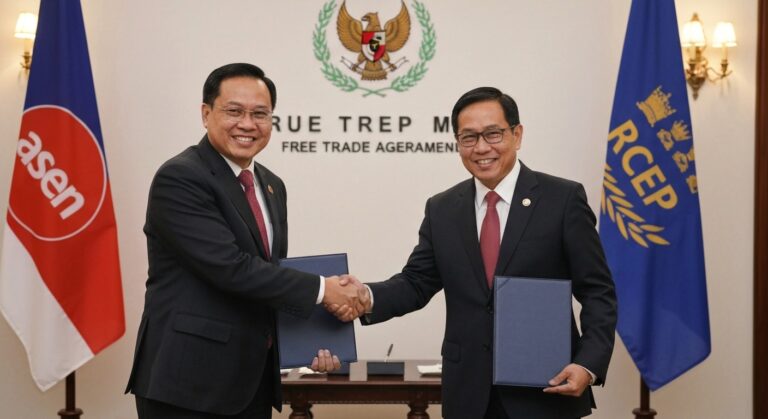
Depending on the country of origin and product category, some shipments may qualify for preferential duty rates under trade agreements Indonesia is party to — but eligibility depends on documentation such as a certificate of origin and specific product criteria that must be verified for each shipment, not assumed from a general trade relationship. See our overview at free trade agreement guidance for how this applies in practice.
What compliance risks should corporate decision-makers watch for?
- Relying on outdated duty-rate information from previous years without re-verification
- Inconsistent product descriptions across shipments from different suppliers
- Assuming permits obtained for one shipment automatically cover future ones
- Underestimating lead time for categories requiring technical agency approval
How does a long-term customs partner support this?
A dedicated customs consultant relationship allows a business to build institutional knowledge of its own shipment patterns over time, rather than starting from zero with each transaction. This is particularly relevant for companies operating across multiple industries — see our broader industries served page for context on sector-specific considerations.
Key takeaways for corporate decision-makers
- Standardize HS code classification across recurring product categories rather than reclassifying with each shipment.
- Build compliance documentation checklists for restricted-category products in advance.
- Forecast landed costs using historical clearance data, not a fixed assumed duty rate.
- Set SLA expectations that account for inspection-lane variability rather than promising fixed turnaround.
- Verify free trade agreement eligibility per shipment rather than assuming blanket coverage.
What role does technology play in modern B2B customs management?
By 2027, most corporate importers rely on some form of digital documentation trail — shared drives or systems where invoices, permits, and past customs declarations are archived and searchable — rather than paper files scattered across departments. This isn’t a regulatory requirement, but it meaningfully speeds up the process of referencing past classifications when a similar shipment recurs, and it makes onboarding a new logistics or compliance staff member considerably faster than relying on institutional memory alone.
None of this replaces direct verification with customs authorities when regulations change — internal systems are only as reliable as the last time they were checked against current rules, so periodic verification remains essential regardless of how well-organized internal documentation is.
A framework for evaluating your current customs setup
Before engaging a consultant or agent, it’s worth assessing where your business currently stands. The table below outlines common maturity levels we see among corporate importers operating in Bali.
| Maturity level | Typical pattern | Common risk |
|---|---|---|
| Ad hoc | Each shipment handled independently, no documented classification standard | Inconsistent HS codes across similar shipments |
| Developing | Some internal documentation, but reliant on individual staff knowledge | Knowledge gaps when staff turnover occurs |
| Established | Documented classification and permit checklist, periodic review | Framework can go stale if not revisited after regulation changes |
| Mature | Ongoing partnership with a consultant, integrated cost forecasting | Requires sustained investment in the relationship |
Most businesses fall somewhere between ad hoc and developing when they first evaluate their setup, which is a normal starting point rather than a sign of a serious problem — the goal of strategic consulting is simply to move deliberately toward a more established framework over time.
Frequently asked questions on B2B customs strategy
How often should a business review its customs classifications?
Given that regulations and tariff schedules can be revised, a periodic review — commonly annual, or whenever product lines change — helps catch classification drift before it accumulates across many shipments. This is a lighter-weight check than a full audit but keeps the framework current.
Should a growing business handle customs in-house or outsource it?
This depends on shipment volume and complexity. Businesses with low, predictable volume often find outsourcing to an experienced agent more cost-effective than building internal expertise, while high-volume importers may benefit from a hybrid model: internal compliance ownership paired with agent execution.
What documentation should be retained after each shipment clears?
Keeping a consistent archive of cleared shipment documents — invoices, customs declarations, permits used — supports both future audits and faster classification reference for similar future shipments, reducing the need to rebuild documentation logic from scratch each time.
Does company size affect how customs authorities treat shipments?
Clearance decisions are made based on the shipment and its documentation, not company size directly. However, larger or more frequent importers may build a track record that makes patterns in their shipments more recognizable to officers over time, which is a byproduct of consistency rather than a formal benefit.
Ready to build a strategic customs process for your business?
Our team can review your current import patterns and outline a documentation and cost-forecasting framework tailored to your business, confirmed against current Indonesian customs regulations. Reach us via WhatsApp at +62 811-3941-4563 or email [email protected].