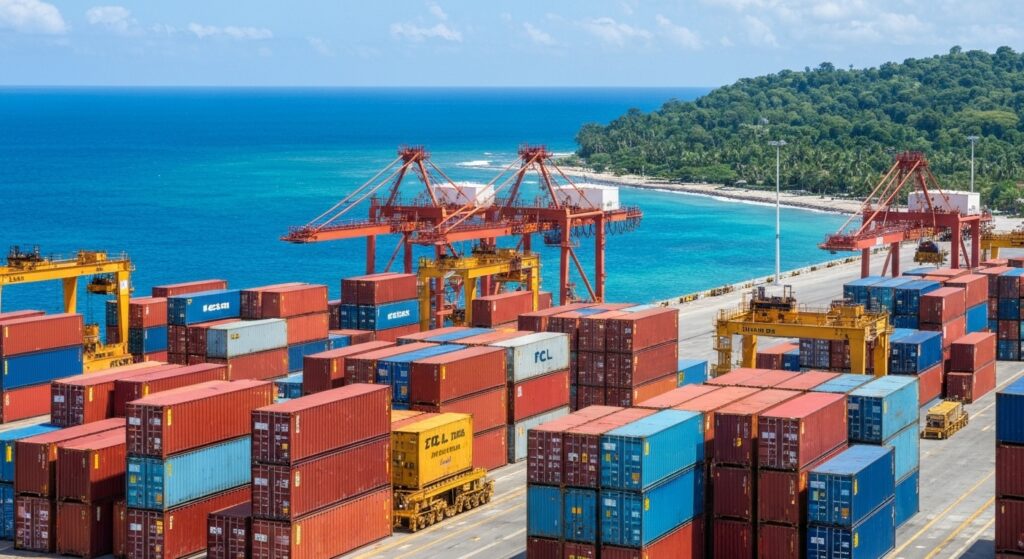
Container Shipping FCL & LCL from Bali
Container shipping is the backbone of international trade from Bali, enabling businesses to transport goods of all sizes efficiently and securely across oceans. BaliCustomsClearance.com specializes in both FCL (Full Container Load) and LCL (Less than Container Load) container shipping services, providing flexible solutions that match your cargo volume, budget, and delivery timeline. Whether you are shipping a full container of Balinese furniture to a European warehouse or consolidating a small batch of artisanal products for an Australian retailer, our container shipping expertise ensures your goods travel safely and arrive on schedule.
Our container shipping operations leverage Bali’s strategic position in the Indonesian archipelago, with access to multiple port options including Benoa Port in Bali, Tanjung Perak in Surabaya, and Tanjung Priok in Jakarta. This multi-port access gives us flexibility to select the optimal departure point based on available sailing schedules, freight rates, and transit time requirements. Combined with our relationships with all major shipping lines, we deliver competitive rates and reliable service for container shipments to over 100 ports worldwide.
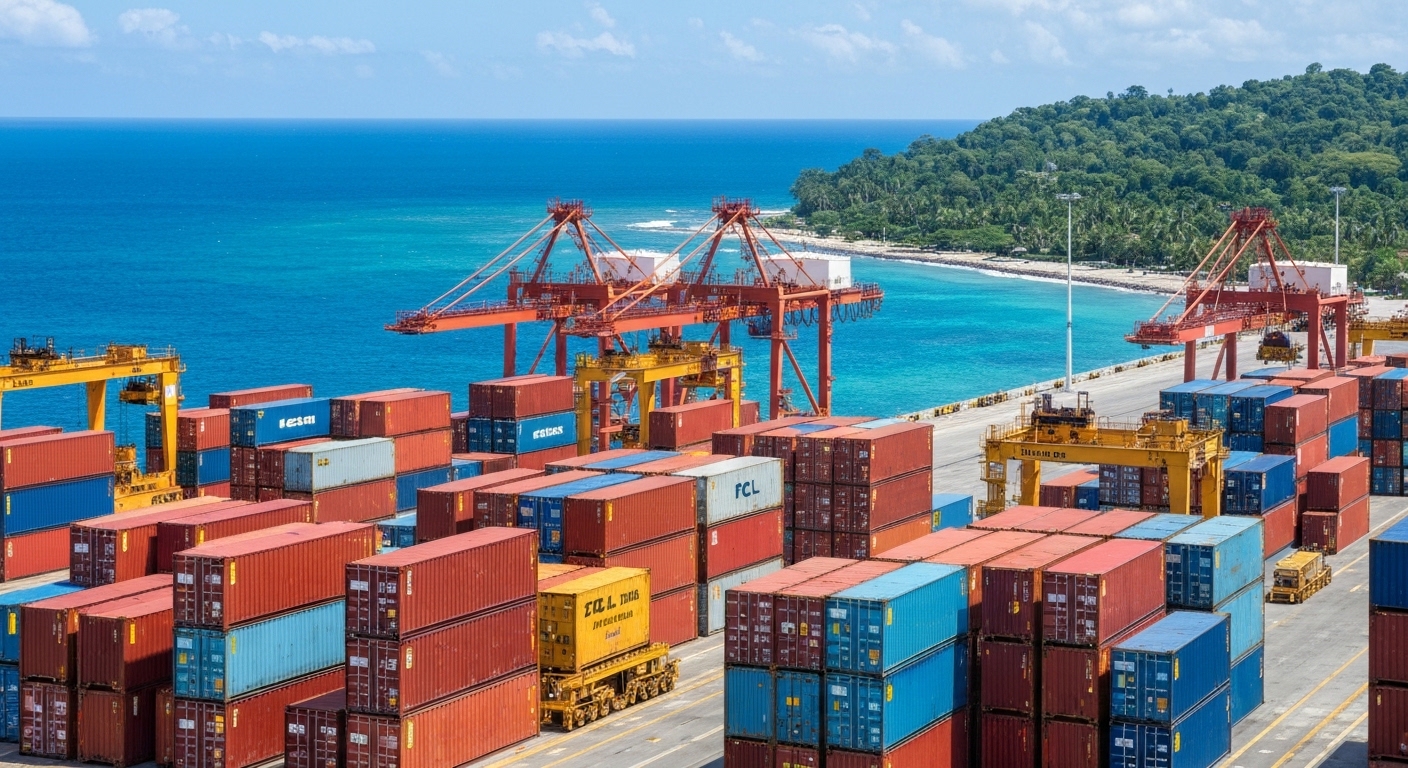
Container Options
20ft Standard Container
Internal dimensions: 5.9m x 2.35m x 2.39m. Capacity: 33 CBM / 28,200 kg max payload. Ideal for heavy cargo like machinery, building materials, and dense commodities. TEU (Twenty-foot Equivalent Unit) is the standard measurement unit in container shipping.
40ft High-Cube Container
Internal dimensions: 12.03m x 2.35m x 2.69m. Capacity: 76 CBM / 26,460 kg max payload. The most popular choice for furniture, textiles, and voluminous cargo. Extra 30cm height compared to standard 40ft provides significantly more cubic capacity.
LCL Consolidation
No minimum volume requirement. Cargo charged per cubic meter (1 CBM minimum billing). Shared container space with compatible cargo. Regular consolidation schedules to major ports worldwide. Ideal for shipments under 15 CBM where FCL would be inefficient.
FCL vs LCL: Making the Right Choice
Choosing between FCL and LCL depends on several factors that our team evaluates for every shipment. The primary consideration is cargo volume. As a general rule, if your shipment exceeds 12-15 CBM, FCL becomes more cost-effective than LCL on a per-cubic-meter basis. Below this threshold, LCL typically offers better value since you only pay for the space your cargo actually occupies rather than an entire container.
Beyond cost, there are important operational differences. FCL shipments enjoy faster transit times because the container travels directly from origin to destination without intermediate handling at consolidation or deconsolidation warehouses. This also means less physical handling of your cargo and lower risk of damage or loss. FCL containers are sealed at the point of stuffing and only opened at the final destination, providing better security for high-value goods.
LCL offers distinct advantages for flexibility and cash flow. You can ship smaller quantities more frequently, maintaining lower inventory levels and responding quickly to market demand. LCL is excellent for sample shipments, market testing, seasonal products, and businesses that prefer just-in-time inventory management. The consolidation process does add 3-7 days to total transit time compared to FCL, but for many shippers, this tradeoff is worthwhile for the cost savings and flexibility.
Our team provides detailed cost comparisons for both options, helping you make an informed decision based on your specific circumstances. We also offer hybrid solutions such as shipping LCL initially while building volume, then transitioning to FCL as your export business grows. For regular shippers, we negotiate volume-based contracts with shipping lines that can significantly reduce per-container costs.
Container Stuffing Best Practices
Proper container loading is essential for cargo safety during the weeks-long ocean journey. Our experienced stuffing teams follow international best practices including strategic weight distribution with heavier items on the bottom and toward the container doors, secure bracing using timber dunnage and airbags, weather protection using moisture-absorbing desiccant bags and waterproof packaging, and thorough photographic documentation of the loading process for insurance and claims purposes. We also ensure compliance with IMO guidelines for container weight verification, preventing overweight containers that could be rejected at the port or pose safety risks during vessel operations.
Related Services
Learn about our Sea Freight routes and transit times. Compare with Air Freight for urgent shipments. See International Shipping for a complete logistics overview. We also provide Door to Door Shipping, Bonded Warehouse storage, and full Customs Clearance services.
Frequently Asked Questions
When should I choose FCL over LCL from Bali?
Choose FCL when your cargo volume exceeds 12-15 CBM, when you need faster transit times, when shipping high-value or fragile goods requiring minimal handling, or when your cargo requires special container types (reefer, open-top, flat-rack). Choose LCL for shipments under 12 CBM, sample orders, market testing shipments, or when cash flow considerations favor smaller, more frequent shipments over large bulk orders.
How is LCL pricing calculated?
LCL is priced per cubic meter (CBM) or per metric ton, whichever yields the higher freight charge (known as weight/measure ratio). The minimum billing is typically 1 CBM. Additional charges include origin handling, destination handling, customs clearance, and delivery fees. Total LCL costs typically range from USD 80-250 per CBM depending on the destination. Contact sales@balipremiumtrip.com for exact rates to your destination.
How long does container shipping from Bali take?
FCL transit times from Bali: Australia 7-14 days, Singapore 3-5 days, China/Japan/Korea 10-18 days, Europe 21-30 days, US West Coast 20-28 days, US East Coast 30-38 days, Middle East 14-21 days. LCL shipments add approximately 3-7 days for consolidation at origin and deconsolidation at destination. Actual transit times depend on the specific port pair and shipping line selected.
Can I mix different products in one container?
Yes, FCL containers can hold mixed cargo as long as the products are compatible. However, certain combinations are prohibited or restricted, such as food items with chemicals, or goods with strong odors alongside absorbent products. For LCL, our consolidation team ensures compatibility between co-loaded shipments. We advise on optimal mixing strategies and ensure proper segregation where needed to protect all cargo in the container.
Book Your Container Shipment
Get FCL and LCL quotes from sales@balipremiumtrip.com or WhatsApp +628113809193.
Chat on WhatsApp